
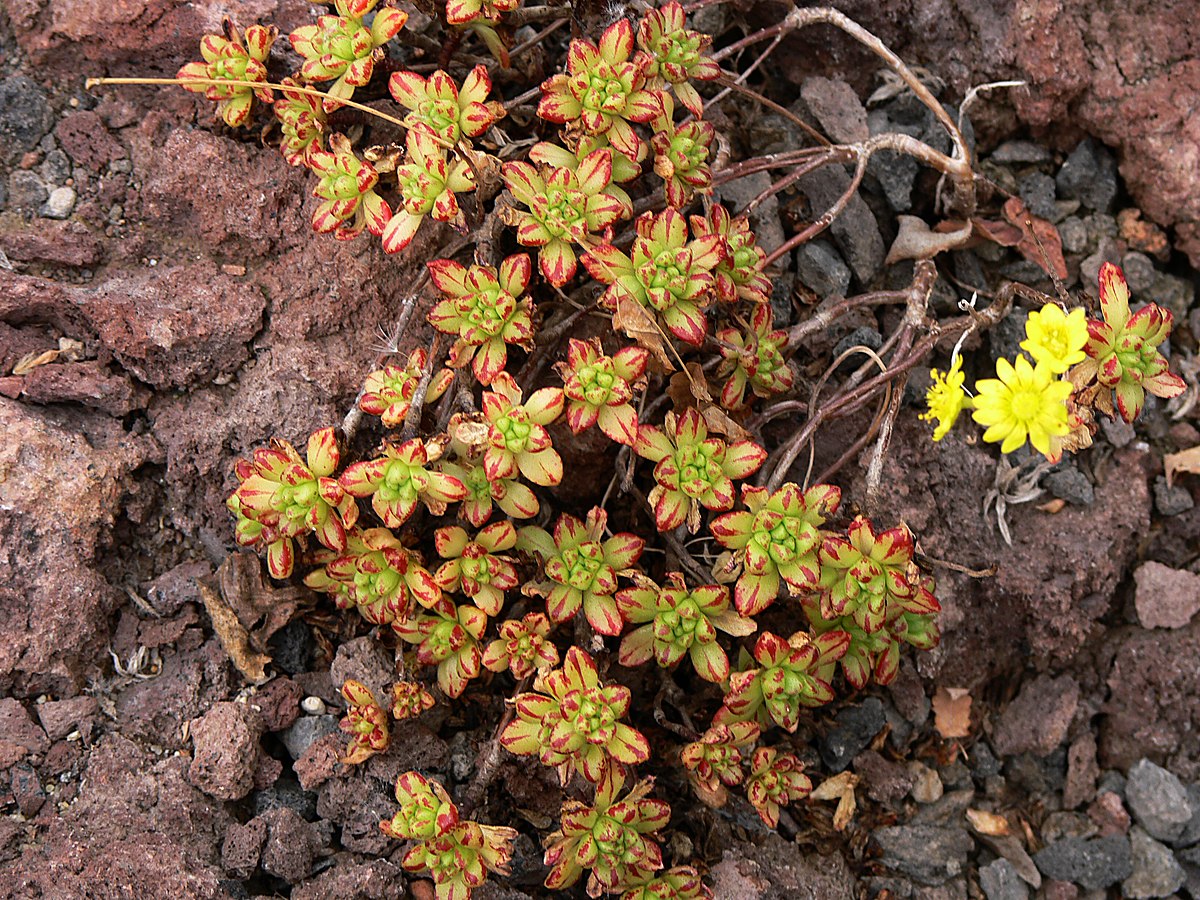
Sometimes it takes a closer look to appreciate an Aeonium. The tiny glossy leaves of Aeonium sedifolium appear to be painted with fine red strokes, at the ends of delicately branching stems.
- Reference name
- sedifolium
- Botanical name
- Aeonium sedifolium (Webb ex Bolle) Pit. & Proust
- Botanical section
- Petrothamnium
- Genus
- Aeonium
- Type
- Botanical taxon
- Native range
- Tenerife · La Palma · La Gomera
- Growth habit
- Shrubby
- Plant height
- Up to 40 cm
- Rosette diameter
- 1.4–3 cm
- Branching
- Highly branching
- Date
- 1859 — Publication of original botanical name
Origin and history
Native to the Canary Islands, the species is reported from Tenerife, La Palma and La Gomera. It grows in rocky crevices and on old stone walls; at Masca on Tenerife, it has been recorded on moist, shaded rocks. Such sites reveal the variety of small refuges available to island Aeoniums.
Carl Bolle published Webb’s name Aichryson sedifolium in 1859. The species was subsequently placed in Greenovia and Sempervivum before Pitard and Proust published its present combination in Aeonium in 1908, according to Kew. The epithet sedifolium, ‘with Sedum-like leaves’, captures the surprise of this little Aeonium.
Chronological milestones
1859 — The references attribute the name Aichryson sedifolium to Webb and Bolle: the plant was initially classified in Aichryson.
1888 — Christ is reported to have published Webb's proposed name Greenovia sedifolium, placing the plant in Greenovia.
1888 — Christ is also reported to have used the combination Sempervivum sedifolium, placing the plant among the houseleeks.
1908 — The name Aeonium sedifolium appears in the book Les Îles Canaries, according to botanical references.
Botanical description
A miniature jewel
The densely branched shrub can reach around 40 cm, yet its rosettes are generally only 1.4–3 cm across. The plump, rounded, glossy leaves are about 0.7–1.5 cm long. Their naturally sticky surface is one of the species’ most distinctive features.
Leaves painted with crimson
Tender greens develop crimson and reddish-brown markings, especially towards the tips and on the undersides. In summer the inner leaves gather tightly, so the rosettes resemble little buds. This palette and miniature habit also lend their charm to many hybrids involving the species.
The variegated form is sometimes called ‘Dwarf Aeonium’ or 小人祭锦. It should not be confused with Aeonium × loartei, a hybrid of A. sedifolium and A. spathulatum.
Flowering
In spring, small flower clusters carry golden-yellow stars above the red and green foliage. The narrow petals give the display a delicate appearance. Each flowering rosette completes its life cycle, while the rest of the shrub continues growing.

Photographs
Do you grow this cultivar? Help document its shapes and seasonal colours. Share your photographs on the Forum.
General photographs


Mutations of ‘sedifolium’
Direct mutations

Documented descendants of ‘sedifolium’
Reserved for Premium members
Growing conditions
☀️ Exposure
Bright light encourages the red leaf markings. Acclimatise gradually to direct sun and protect it from summer scorching.
💧 Watering
Water during active growth, allowing the mix to dry between waterings. Reduce watering substantially when the rosettes close during dormancy.
🪨 Substrate
Choose a gritty, free-draining mix and a pot with drainage holes. Avoid soil that remains wet for long periods.
🌡️ Temperatures
Shelter it from frost and prolonged cold rain. In summer, provide ventilation and protection in extreme heat.


