
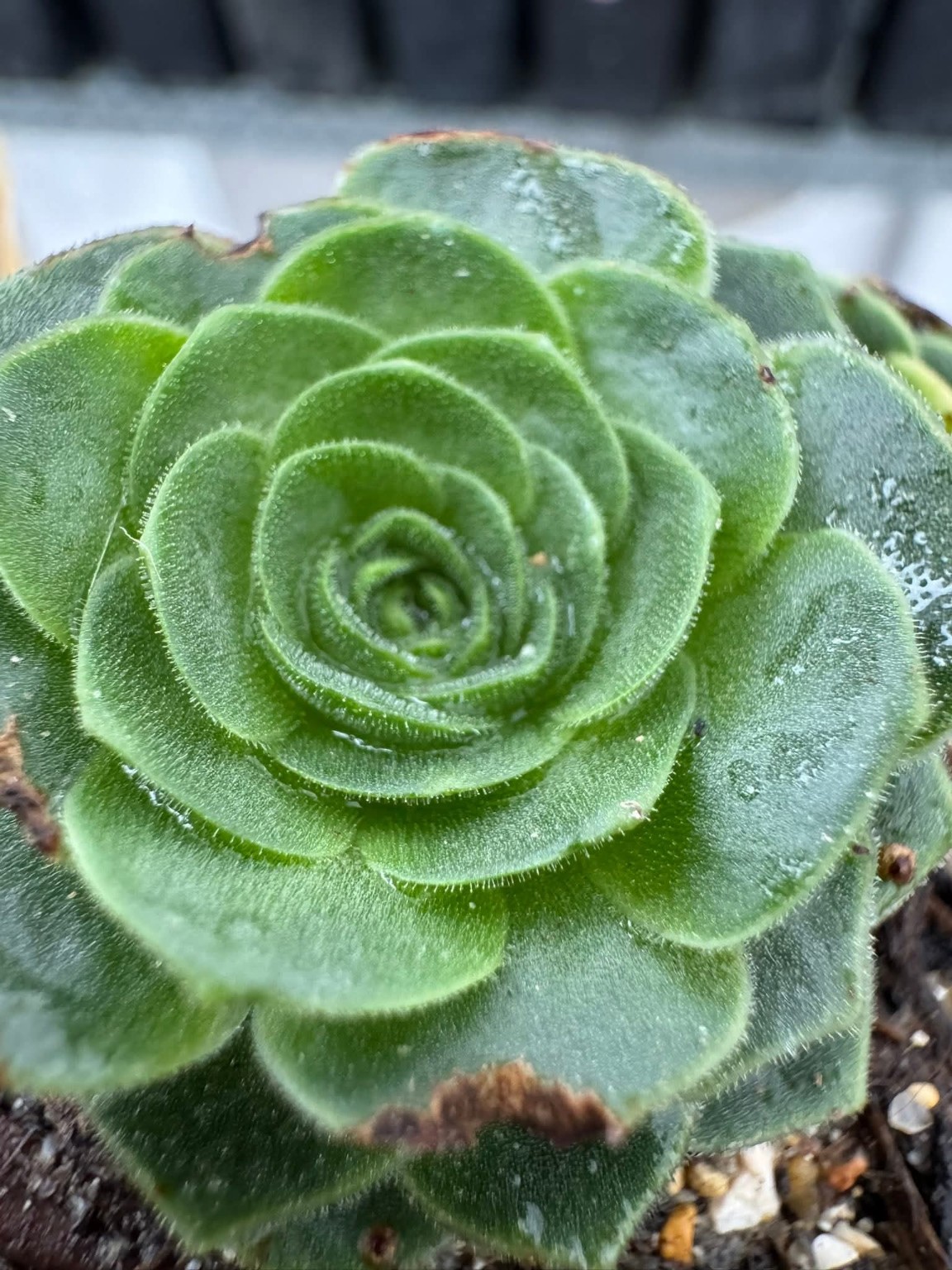
Among the rocky heights of Tenerife, Aeonium aizoon gathers its tiny green rosettes into living clusters. This miniature species rewards anyone who takes a closer look.
- Reference name
- aizoon
- Botanical section
- Greenovia
- Genus
- Aeonium
- Type
- Botanical taxon
- Growth habit
- Clump-forming
- Rosette diameter
- 3–5 cm
- Branching
- Frequent offsets
- Date
- 1859 — Publication of the botanical name
Origin and history
Aeonium aizoon has little in common with the tall, branching Aeoniums. On Tenerife’s rocky slopes, this small island species settles into cracks and crevices, its rosettes gathering into quiet little clumps.
Older plant labels often carry the name Greenovia aizoon. It recalls a time when the smaller Greenovia of the Canary Islands were treated separately from Aeonium. Bringing them together under Aeonium changed the plant’s name, but not its distinctive miniature character.
Chronological milestones
1859 — Bolle publishes the name Greenovia aizoon in Bonplandia, treating the plant as a member of Greenovia.
1995 — Mes transfers Greenovia aizoon to Aeonium under the name Aeonium aizoon.
Botanical description
Its size is the first lovely surprise. While some Aeoniums spread enormous rosettes, aizoon keeps each fairly flat little crown to about 3–5 cm across. Offsets gather closely together until the plant resembles a mosaic of green hearts.
Move in closer and the leaves reveal another detail: fine glandular hairs give them a slightly sticky touch. That is a natural feature of the species, and exactly the sort of thing that delights a collector who enjoys looking carefully. During the dry season the rosettes often remain more open than those of several other former Greenovia species.
There is no need for dramatic variegation here. The beauty of Aeonium aizoon lies in the quiet repetition of its rosettes, the delicacy of its foliage and the miniature landscape it creates.
Flowering
Have you photographed this cultivar in bloom? Share flowering photographs on the Forum.
As in other monocarpic Aeoniums, a rosette completes its life cycle after flowering, while neighbouring rosettes may continue to grow. Buds, flowers and the shape of the inflorescence deserve the same close attention as its leaves.
Photographs
Do you grow this cultivar? Help document its shapes and seasonal colours. Share your photographs on the Forum.
Documented descendants of ‘aizoon’
Reserved for Premium members
Growing conditions
☀️ Light
Provide plenty of light, including gentle sunshine in mild weather. Acclimate plants gradually to direct sun and shield their small rosettes from scorching summer exposure.
💧 Watering
Growth is usually strongest from autumn through spring. Water carefully once the substrate has dried, then reduce watering considerably when summer heat slows the plant. Small rosettes in persistently wet compost can deteriorate quickly.
🪨 Substrate
Think of the species’ rocky habitat: choose a mineral-rich, airy and very free-draining mix in a pot with drainage holes. Excess water should escape freely rather than collecting around the roots.
🌡️ Temperatures
Its mountain origins are no reason to gamble with freezing temperatures in a pot. Protect from frost, particularly when damp, and allow good airflow during hot weather.


