
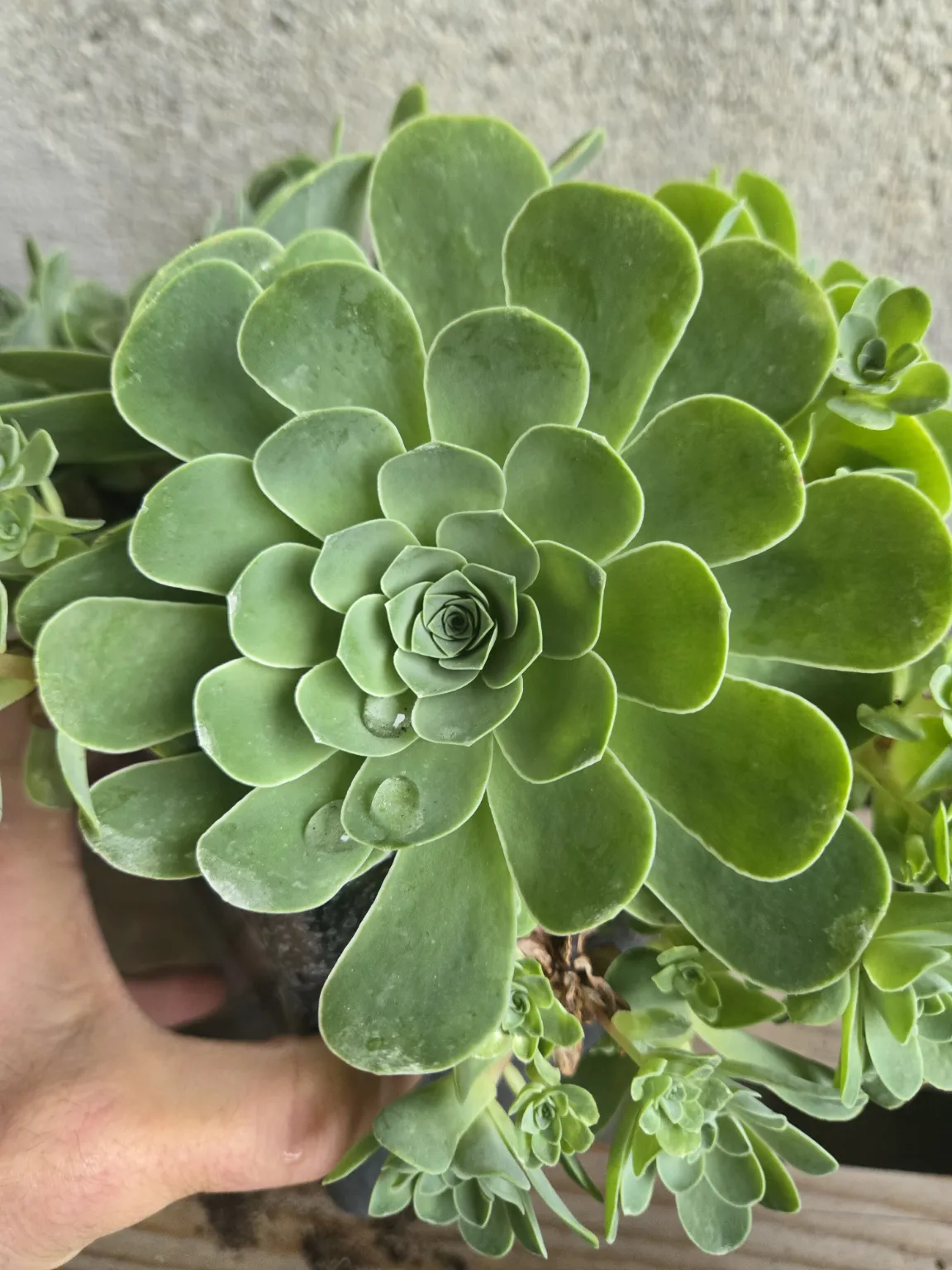
Aeonium dodrantale looks like a gathering of tiny rosebuds. Its tightly packed rosettes form compact groups and draw almost closed as dry weather arrives. It is one of the most charming members of the plants once known as Greenovia.
- Reference name
- dodrantale
- Botanical section
- Greenovia
- Genus
- Aeonium
- Type
- Botanical taxon
- Country of origin
- Spain
- Growth habit
- Open rosette
- Rosette diameter
- 3–6 cm
- Name publication
- 1809
Origin and history
Willdenow described this species in 1809 as Sempervivum dodrantale. Webb and Berthelot later placed it under the name Greenovia dodrantalis, a name that remains familiar to collectors. Today it is generally included in Aeonium following the combination published by Mes in 1995.
Native to Tenerife, it grows at rocky sites, including middle elevations. Its changing generic placement reflects a developing understanding of the relationship between Aeonium and Greenovia, not the invention of a new garden plant.
The species and its nominal form also need to be distinguished from related members of the dodrantale group and from variegated selections in cultivation. A similar rosebud shape does not make every plant identical.
Chronological milestones
1809 — Reported — Publication of the original botanical name.
1840 — Reported — Publication of a new botanical combination.
1995 — Reported — Publication of a new botanical combination.
Botanical description
Aeonium dodrantale produces small cup- or urn-shaped rosettes, usually 3–6 cm in diameter. The leaves remain fairly close together even during active growth, giving each crown the appearance of a neatly folded rose.
During the dry season the rosette closes more firmly, with outer leaves protecting the delicate centre. Short lateral stems produce offsets, allowing the plant to build a cluster of closely arranged crowns over time.
Compared with Aeonium aureum, another former Greenovia, dodrantale is especially recognisable by the small size of its rosettes and its tendency to produce grouped offsets. These features are more useful than a single shade of green.
Flowering
Have you photographed this cultivar in bloom? Share flowering photographs on the Forum.
Flowering shoots carry numerous deep yellow flowers. The flowering rosette is monocarpic and eventually dies, but offsets that have not flowered can continue growing.
Photographs
Do you grow this cultivar? Help document its shapes and seasonal colours. Share your photographs on the Forum.
Winter photographs

Summer photographs


Mutations of ‘dodrantale’
Direct mutations

Documented descendants of ‘dodrantale’
Reserved for Premium members
Growing conditions
☀️ Light
Give it bright but gentle light, increasing direct sun gradually when growth resumes. Avoid suddenly placing closed summer rosettes in scorching sun.
💧 Watering
Water as the plant becomes active and its crowns begin to open, allowing the mix to drain and dry between applications. Reduce watering considerably during summer dormancy.
🪨 Substrate
Choose an airy, mineral-rich, sharply draining mix. Use a pot with drainage holes and avoid letting young offsets rest on persistently wet compost.
🌡️ Temperatures
Protect from frost and stagnant cold dampness. Cool, bright conditions with good air circulation are well suited to winter growth.


