
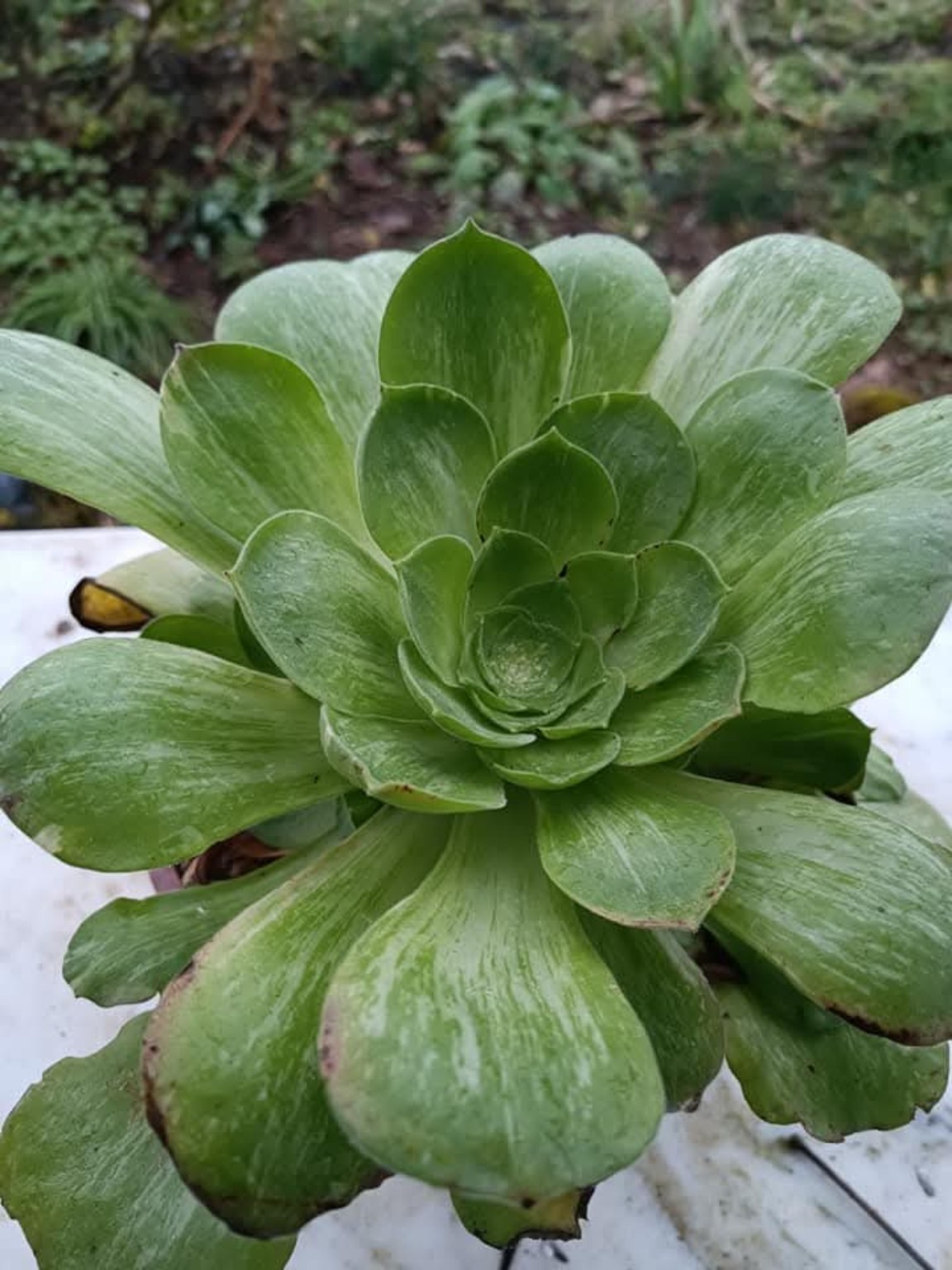
Sometimes a change in the foliage gives a familiar Aeonium an entirely new face. The variegated form of ‘Californicum’ illustrates the fascinating diversity of the genus.
- Reference name
- Californicum var
- Other names
- Californicum Variegata
- Genus
- Aeonium
- Type
- Variegated cultivar
- Mutation of
- Californicum
- Reference date
- 2021
Family tree
Reserved for Premium members
Origin and history
This variegated form is a horticultural mutation of Aeonium ‘Californicum’. On 21 October 2024, a British horticultural account described about three years of cultivation and observation, with distribution planned for 2025. Commercial presence in 2021 has also been reported, but not independently confirmed. These milestones reveal part of its journey without establishing exactly when the mutation arose.
Chronological milestones
2021 — Reported — Documented event.
2021 — Reported — Documented event.
2024 — Documented event.
Botanical description
A new face for ‘Californicum’
The distinguishing feature of this selection is its variegated foliage, setting its rosettes apart from the green form. The stability of its patterns, their changes over the year and mature dimensions remain to be established.
Flowering
Have you photographed this cultivar in bloom? Share flowering photographs on the Forum.
The flowering of this variegated form has yet to be documented.
Photographs
Do you grow this cultivar? Help document its shapes and seasonal colours. Share your photographs on the Forum.
Winter photographs


Summer photographs

Growing conditions
☀️ Light
Provide plenty of diffuse light initially, then gradually acclimatise it to direct sunlight.
💧 Watering
Water during active growth once the mix has dried sufficiently. Space out watering when heat slows growth.
🪨 Substrate
Use a porous, free-draining mix in a container with drainage holes.
🌡️ Temperatures
Protect it from frost and cold damp conditions in winter, and shelter the foliage from excessive heat.


